top of page









fka-design
2026
Yakushima, Japan
Not a Hotel
design, architecture, home, residential, small scale
a Stone is Not a Rock
design studio
year
location
client
categories
Chapter 01: Ethos
Yakushima is an island that demands respect. It is a dynamic, unforgiving, visceral, and sublime place. Each season, each day, and each hour is marked by an ever-changing environment to which the local flora, fauna, and people have adapted to. The island is characterized by three elemental forces: the ocean, the mountain, and the forest. These conditions do not form a backdrop. They actively shape movement, perception, and time.
The project begins from the understanding that architecture cannot mimic nature. It can only adapt to it, frame it, and compose it. Hence, a Stone is Not a Rock. A rock is formed naturally through geological time; a stone is shaped, cut, and positioned by human hands. This architecture exists within that distinction.
The concept operates through a paired logic: a cause and effect. First, as a relationship between human and environment, where nature is framed through structure, infrastructure, and material. Second, as a journey. The site has been traced by a continuous ascending path from the southern access road to the northern stream, with the villa positioned intentionally along this route. Each space becomes a pause along a hike, a moment of rest, reflection, and reorientation within the landscape.
The site is read through three directional relationships: downward toward the ocean, upward toward the mountain, and inward into the forest. These orientations establish three zones that structure both the landscape and the architecture. The building does not attempt to dissolve into nature, nor does it stand in contrast to it. Instead, it operates as a calibrated intervention that frames Yakushima as a series of composed moments.
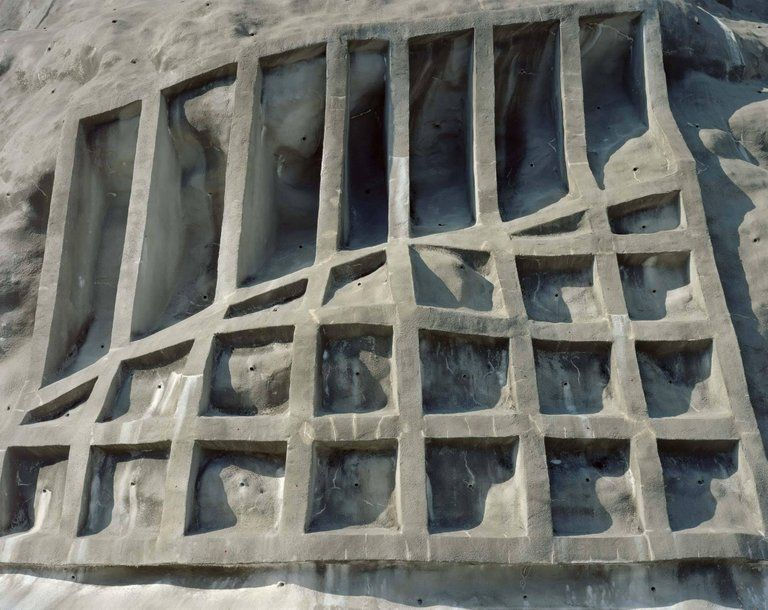
The history of the site carries a similar familiar tale. That of attempted control: terracing, poured concrete, and remnants of infrastructure once intended to control and replicate natural systems. Rather than erasing these elements, the proposal absorbs and repurposes them, allowing them to rewild and integrate into the terrain, accelerating the imminent natural processes.
This architecture does not seek to become a rock.
It seeks to become a stone: shaped by intention, marked by human touch, and placed deliberately, respecting the living landscape.
Chapter 02: Journey
Arrival begins at the southern edge of the site. Moving upward along the existing drive, a floating, glowing volume gradually emerges above a recessed carport. The carport is gently depressed, allowing vehicles to pass beneath the structure while preserving the continuity of the terrain.
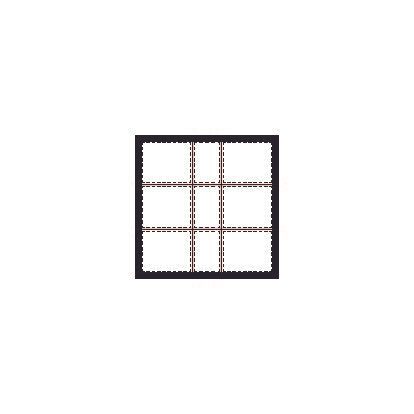
The plan is organized by a simple square and a grid of nine spaces. These are then composed into three distinct figures. Each figure is anchored on top of the western edge, where the bedrooms are embedded into the forest, while simultaneously orienting outward to the landscape.
These three figures are not experienced as objects, but as a continuous journey. The northern figure lifts its head toward the mountain, framing water as it descends from the upper stream and drawing the eye toward the summit. The southern figure bends downward, orienting toward the ocean and back to the point of arrival. Between them, the central figure cradles the terrain, holding an edge against existing rocks and the central tree.
From the carport, a winding path ascends between land and structure, drawing visitors upward and inward. Movement becomes the primary organizational device, reinforcing the idea of architecture as journey.
The most prominent exterior elements are the gabion screen walls. As one ascends, the path is flanked by existing rock on one side and constructed gabion on the other, immediately revealing the tension between natural formation and human infrastructure. From the point of entry, the walls peel outward, forming a ravine that both welcomes and compresses.
Materially, the gabions exist between architecture and landscape. Stone is held within stainless steel mesh, transforming loose geology into inhabitable infrastructure. This is not an attempt to imitate nature, but to reveal a humanized condition that exists between landscape and construction.
Floating above, the roof responds directly to the slope of the site, rising and falling with the terrain. Its subtle dips correspond to drainage, directing water to key entrances and arrival points. Water is curated not only as movement, but as sound, atmosphere, and life.
The zinc shingles reinforce the infrastructural character of the building, weathering over time while maintaining a clear, contemporary expression. Each gesture of the exterior is a recomposition of existing forces, shaped and positioned by human intent.
Chapter 03: Immersion
Inside, the plan resolves into a clear and disciplined order. Each juncture incorporates a subtle step, allowing for a dynamic relationship between form and space. A central corridor bisects the plan, forming a spine that connects all spaces while reinforcing the journey through the building. This axis establishes a constant dialogue between west and east.
To the west, spaces are defined by warm cedar and embedded into the forest. Views are enhanced and the building opens up, sheltered from the elements. To the east, stone and glass curate exposure and openness. Here, views are carefully composed, while the stone gabions shield the glass facade from the elements coming up off the ocean.
The architectural strategy prioritizes the use of existing infrastructure while minimizing impact on the site. The cantilever is held by a large structural box that doubles as storage. Foundations float in a manner similar to traditional Ishibadate construction, allowing rooms to sit lightly and preserve the landscape. The mechanical area is consolidated within the southern clearing near the main road, where utilities are accessible and distanced from sensitive landscape areas.
The repetition of gabion fin walls reinforces the logic of the path, maintaining continuity between landscape, structure, and interior experience. The clear sidedness of the villa reflects the natural forces that have shaped the site over time.
Moving south, the living and dining spaces open toward the ocean and southern light. The view extends back to the point of arrival, allowing occupants to observe changing weather systems and distant horizons. Furnishings sit low and grounded, reading as deliberate man-made elements placed carefully atop a landscape of stone and moss.
Traveling north, the corridor leads toward the spa. Here, the forest rises sharply toward the mountain, and the architecture begins to recede. After enjoying the cave-like sauna or a hot bath in a natural stone tub, occupants emerge onto an open terrace oriented uphill, aligning rest with elevation and recovery with ascent.
Turning west, the bedrooms offer an immersive experience, evaporating the facade. Each is equal in dimension but differentiated by view. These spaces are intended for withdrawal, immersion, and reflection, whether it’s resting or stepping out into the forest.
Each room becomes a pause along a continuous ascent, reframing the landscape. Ultimately, the project returns to the logic of the hike. The architecture does not promise a singular destination, but instead asks a quieter question: is the destination sweeter than the journey, or is the journey itself the experience worth inhabiting?
bottom of page